






Personal blog of christian
writer & fallible mom
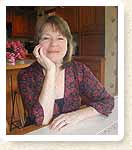
Katy McKenna Raymond
in Kansas City, Missouri
Katy is represented by
Greg Johnson at
WordServe Literary


Read more Katy at
LateBoomer.net
Recent Posts
- Try
- Becoming Brenda Starr
- Off Beat
- Scattered
- That’s It
- So I’ve Finally Signed With An Agent. Now What?
- The Spoon
- Sciatica
- Sweetheart
- A Woman’s Train of Thought Has No Caboose
- However much we own, we are all still living on borrowed time
- After all, when restaurants shrink portions, they don’t shrink prices.
- As with everything in life, balance is key.
- Slow down, you move too fast…
- Yeah, I know. I have issues.
Syndicate


E me at katy @ ngenius.com
The Legacy (#1626)
Remembering nothing,Â
I am his keeper.Â
Feathery wisp, tinged with faintest auburn,Â
Yellowed cellophane,Â
Faded page,Â
Mildewed book.Â
OneÂ
FingerÂ
TremblesÂ
Touching his hair,Â
Long decades unmussed.Â
Tugging it once more,Â
Like the baby I was.Â
Did he laugh? Or cry?Â
Or pay me back?Â
He died.Â
OneÂ
TearÂ
FallsÂ
Glistening, shimmering,Â
Onto my brother’s lock.Â
Onto this,Â
My inheritance.Â
Permalink
Grouch (#1625)
So I’ve been just a tad grouchy recently, and honestly, a lot of it has to do with cash flow.
We own a small business, a company of only two employees—-us. We’ve managed to fall into that age group where purchasing health insurance is a pricey venture. You would probably have a coronary if I told you how much our premiums and deductibles cost so I will spare you, since YOUR insurance may not be sufficient to cover such a medical disaster.
In addition, I just added up all the taxes I’ve written checks for in January alone—-and this includes one month’s federal payroll taxes, unemployment insurance, three months worth of payroll taxes to the state of MO, and our estimated personal taxes to the feds and MO on the non-corporate side of the equation. Our tax liability ALONE exceeded the income we brought in in January by 50%! And that’s BEFORE we purchase health, life, disability, homeowners, and car insurance. Before we pay our mortgage and tithe. Not that I’m complaining, you understand.
Oh, wait. I am.
In the past year or so, we’ve found collecting on the monies owed us to be a arduous task, whereas in most of the twelve years we’ve been running this business, we’ve only had occasional serious problems getting what was coming to us. Now, we’re made to feel like heels for requesting to be paid for jobs that were completed many months ago, and that just feels wrong.
What feels more wrong, though, is my lack of thankfulness for everything we have. And when I get like this, I have to go back to certain behaviors that have never failed to fill me with a humble gratitude, an attitude that I need to practice every single day, no matter what.
And so I iron. Ironing convinces me, quicker than any other discipline, that we have more nice clothes than any couple has a right to. There’s nothing “designer” in the whole mix, mind you, but we have outfits for any occasion that might come up, and who has a right to ask for more than that?
And then I cook. And when I cook, I use ingredients I find in my own pantry, refrigerator, and freezer. I challenge myself to make the most nutritious and tasty meals imaginable with items I already have in the house. I thank God, as I cook, for the abundance he’s given us, even if the abundance did not arrive this month. We then make it a point to tell each other how delicious our meals are, and how affordable, and how much less expensive than if we ate out.
And then I clean. I have inherited many beautiful antiques from beloved family members. There’s nothing like giving my great-grandmother’s pie safe a good once-over with Murphey’s Oil Soap and then maybe rubbing a nice coating of lemon oil into its grain to made me fully cognizant of the heritage I’ve been given. There’s nothing like changing the sheets on every bed, wiping down all the (old, but bravely hanging in there) appliances, and dusting cherished gifts from children now long grown to bring on an understanding of what it means to be truly blessed.
And then I take inventory of all the gift cards and Groupons I’ve got stacked up here. If I space out the spending of them, we could have one or two nice outings per month this year at restaurants, the dinner theater, and the movies, without spending a dime! We find ourselves becoming grateful because we have so much fun to look forward to.
And then I serve. Whether it’s my husband, The Moms, or a friend in need, putting someone else’s concerns ahead of my own is an automatic gratitude builder. I always forget that when I set out to serve, and it’s certainly not my motivation, but it nevertheless turns out to be true.
And then, after (or sometimes before) all that is said and done, I write. There is something so freeing about arriving at the end of the day and realizing you did the work God cut out for you. A huge burden is lifted when I get the words down on paper, when I move toward a goal of finishing a manuscript, and the lightness afterwards of a well-deserved sleep makes me thankful indeed.
I need to keep practicing gratitude. I need to ditch the grouchiness. And, for sanity’s sake, we might need to hire someone to do collections for us.
In the meantime, there are some really cute blouses in the ironing basket that I completely forgot I had. An entirely new wardrobe awaits, for which I am very thankful.
Permalink
Frozen Falls (#1624)
Caught in mid-air, frozen in place
Overflowing power reined in by frigid facts.
Unrelenting
Going nowhere, until the sun dictates.
Waterfall’s icicles, solidified strength
Stalagtites paralyzed by nature’s force.
Standing silent
Till tomorrow, when the torrent resumes.
Permalink
Silent Hour, Holy Hour (#1623)
There are gifts wrapped inside the package of silence that can’t be given any other way.
If I fail to fall quiet, my eyes rarely seek out the window and the landscape beyond.I miss the solitary winter cardinal as it flings itself from limb to barren limb, like Turkish red embroidery stitched upon a field of rugged homespun fabric.
If I fail at noise reduction, my fingers neither anticipate nor appreciate the fine texture of a sheet of linen stationery, or a sheet of Egyptian cotton. I do not feel, when life is loud, the tenderness of my husband’s soul when his bearded cheek caresses my hand.
If I turn down the volume on everything but my own heartbeat, though, for even the briefest of moments, I hear thoughts swirling in my head. They are my thoughts, all mine, not those of another planted there during cacophonous hours. Sounding like a foreign language to me at first, a language I only vaguely recall, my quiet thoughts soon feel like the measure of who I am.
In utter silence, I hear droplets from icicles pinging the porch rail.
I feel breaths, drawn in shallows, making way for dreams drawn from depths.
Permalink
Break In The Storms (#1622)
Spindly limbs
Crackling under weighted, leaden snow
Like creaking bones,
Petrified and fracture-ready.
They splinter, one by one,
Dangling, useless arms
Swinging in the storm,
Till separated at the shoulder.
The birds, here by mistaken instinct,
Hear the trees’ screeching screams
But pay no mind,
Free from alarm.
They kiss each falling part,
Then escape each crashing branch.
Letting go to save their lives,
Taking flight to higher sky.
Permalink
Falling By The Wayside (#1621)
There are many things I’m letting go, so very many things.
I’ve learned, in slow motion over the span of decades, with arms outreached and exhausted from perpetual effort, that I cannot keep a single sparrow from falling out of the sky. I can cradle the lifeless fallen in my cupped palm, let a stray tear fall on its head in the baptism of the dead, and bury it in a shoe box, if I’m so inclined. But I can’t prevent its fall or soften the inevitable crash, either.
I am not God.
I’ve learned, during frantic episodes of manic good works, that I cannot direct the course of another’s life. I am not called to be so kind that I inadvertently protect a human soul from the dealings of a loving Savior. I am not appointed to prevent a friend from coming into contact with the One who may or may not seem to be, at that moment, as beneficient as I imagine myself to be.
I am not God.
I’ve learned, through years of multi-tasking yet somehow missing the miracles in the moment, that each of us is only given one brief life on this earth. It flees as if on fire, faster every day it races toward the finish line as it sees the prize ahead, and I am powerless to stop it. I cannot slow the speed with which my earthly life sprints, but I can slow my heart and mind to match the unrushed rhythms of eternity. I can focus on the minutest detail of the now, and stop the clock, second by second.
Even though I am not God.
I am letting so many things fall by the wayside. I am casting aside the weights that so easily encumber me, the burdens I am not meant to carry, the concerns that have not been fashioned by my Creator for me to bear.
I, too, am falling by the wayside, like a seed sown in uncertain and apparently unyielding ground. I am trusting more than ever in the One who raises us and brings forth fruit from those who answer His frightening bidding to fall to the earth and die.
Because, when all is said and done, I am not now, nor will I ever be God.
Permalink
The Biggest Loser (#1620)
I read an article online not long ago that I can’t get out of my mind. It was written by a woman who’s taken her very elderly mother into her home, to live with her and her family. I don’t know what the younger woman does for a living, but I wouldn’t be surprised to learn she’s a professional writer.
The commenters to her piece almost universally praised her for her beautiful words (they were certainly evocative, in that memoirish, creative non-fiction way so many readers and writers admire, including me). Many also encouraged the author’s nobility in caring so deeply and well for her mother that she would spare her mother the indignity of being institutionalized (for significant dementia) and instead provide care and oversight in a family setting.
So why did I cringe when I read the story, and why am I wincing still?
Because it was so clear reading the author’s account that the old lady’s most basic needs were not being met, and that the daughter resented the mother’s intrusion into what would have otherwise been a rather streamlined (and yes, dare I say it, fun!) life.
The author mentioned her mother wearing the same outfit—-day and night—-for six days, and refusing (or was it merely forgetting?) to bathe. She wrote that her mother got frustrated with their conversation early one morning, grabbed the car keys, and drove down the driveway. Do responsible caregivers really allow their elders to drive cars, no matter how physically capable they might be to do so, when their cognitive abilities have declined so markedly that they can’t remember what happened thirty seconds ago?
The writer said her mother stopped at the edge of the driveway and drove no farther, because she knew she wouldn’t know how to get back home. This is a poor understanding of advanced dementia, in my experience. How can the daughter predict with certainty which things her mother will “know” and “not know” in a specific situation? Or from one day—-or one moment—-to the next? Dementia is progressive, not static. Its victims are unpredictable, even if immobile—-and this writer’s mother is anything but immobile.
My own mother-in-law took automotive chances regularly for months, if not years, before we her children were aware of her driving difficulties. She was only determined to make short runs to the grocery store, just a few blocks from her house, but finally admitted that every time she tried it she had to stop and ask directions back to her own address. The gas station attendant knew her well. She’d pull in, display her driver’s license to him, and he’d tell her exactly which corners to turn at if she ever hoped to see her home again.
“Don’t tell the others….” she begged my sister-in-law, who immediately, of course, told the others. And all of us put our heads together and figured out the first in a series of next steps, which was obviously to remove the car keys from her possession. For her sake, though, we had to do it in a way that appealed to her love for all “the puppies,” who might be in danger if she were to be in an accident. But appeal we did, and act we did.
Besides the fact that her mom is not getting bathed or wearing clean clothing and is a clear flight risk, the author also referred to her mom’s endless energy and desire to be moving from one activity straight into the next. For the daughter, who just wanted to sip some coffee in peace (I get that, I really do!), her mom’s enthusiasm was frustrating and she didn’t hesitate to let her mom know how she felt.
Yeah, that’s honest and gripping storytelling. So raw, it might even be award-winning, I don’t know. But I keep thinking about the old lady’s social needs, going almost completely unmet, and how Memory Care units are designed for gals just like her.
In the right setting, the demented woman would not be constantly barraged with questions she couldn’t answer. Or questions worded in such a way that she felt like she was being “tested” and always failing. In the right setting, she would have family relationships plus some peers with whom to chatter, do crafts, share meals, and go on outings.
I am not at all saying that the adult child’s home is never the right setting for the demented parent. In many cases, it’s the perfect setting. But I wish every child who’s faced with a parent’s decline would consider the elder’s best interests to be foremost in the decision making process. For those whose parent has no problem getting in and out of a car, some days spent in a terrific elder daycare setting might be a wonderful social solution, as well as a respite for both parent and child.
If the adult child consistently loses patience with a parent who is physically amazing but mentally a no-show, I hate to think how quickly nobility would fly out the window if the old lady, I don’t know, broke her hip or something.
With everything our elderly stand to lose as their days draw to an ultimate close, I see no earthly reason why anyone’s mom should end up The Biggest Loser of all.
Permalink
Maybe It’s Not Magic, After All (#1619)
I am currently sitting on more potentially publishable material than any one person has a right to.
I’ve been writing humor pieces for 15 years, and while many have been published in newspapers and magazines, tons more have only ever seen the light of blog. I’ve got solid ideas for a dozen novels, have a good start on four or so, but have completed only one. In addition, I’ve got some terrific plans for creative non-fiction books, at least ten titles that I can remember off the top of my head.
So what’s my problem, you ask? Why don’t I get my rear in gear and get my act together?
That’s easy. My problem is that I’ve believed in magic.
It hasn’t always been like this. There was a time when a friend dared me to snail mail (our only option back then, before email had even entered our imaginations) articles out to publishers and issued an ultimatum that we wouldn’t meet up socially again until I’d overcome this hurdle. In one month’s time, I sent out three finished pieces (unsolicited) and all three were purchased and subsequently published.
I apparently respond well to ultimatums. My friend was shocked that I’d had such a simple time placing my articles, and happy she’d had a hand in prompting me to risk the rejections and reap the reward.
I’ve experienced my share of rejections since then, don’t get me wrong. But not so many that I didn’t also have regular sales, the number of which was sufficient to keep me motivated and confident that I was on the right path.
Somewhere along the line, though, things took a bad turn in my psyche. It didn’t help that my entire life got so waylaid with eldercare issues, for such an extended period of time (ten years running now), that I became physically ill myself. I put my entire life on hold, not because I wanted to, but because I did not have the spiritual, emotional, or physical reserves to do The Moms’ lives and mine, too.
Duty called. I answered. And I started believing the lie that only people who had Magically Delicious Lives got published—-and clearly my life was and is anything but a box of Lucky Charms.
But now I wonder how I could have been so deceived. I know amazing writers who’ve not abandoned ship even when they’ve contracted cancer and had to go through chemo. I know writers whose adult or teenaged children give them constant fits, but they continue to lead productive creative lives, and others with multiple school-aged kids who manage all their many activities and still meet deadlines.
And yes, I now know writers who deal with caring for their elders without completely sacrificing their own ambitions and callings. It can be done. It’s done every day, by countless dedicated artists who are served quite well by their disbelief in magic.
These inspiring authors are making it happen in spite of their circumstances, in spite of the cards they’ve been dealt, in spite of the incredible odds against them.
So today, I’m committing to ditching my misplaced belief in magic. I’m going to do what it takes to put one word after another, to follow one sentence with the next, and to put together viable book proposals based on the wonderful ideas I’ve been sitting on for far too long.
But even though I’m deliberately demystifying the process of writing and getting my materials out there for consideration, there’s one kind of magic I’ll never give up—the kind that happens when a reader connects with the written word and is changed by it, touched by it, made more alive than she ever was before the encounter.
That’s the only magic I still hope to make happen.
Permalink
That Pesky Good Samaritan (#1618)
I’ve been a follower of Jesus for a good long time, but I’ve gotta be honest with you: There are some Bible stories that bug the heck out of me.
I’m fairly certain I discern the makings of an ongoing series of blog posts on this subject, so I won’t spill all the bugged beans in one entry. But for today, let me just say that I’ve never thought The Good Samaritan was overly compassionate. In fact, I’ve always thought he fell down on the job with a major thud.
So why did Jesus give him—-ostensibly, a fictional character in a parable the Savior was free to spin any way He liked—-such Scot-free kudos? Sure, compared to the religious creeps who passed by the beat-up guy on the other side of the road and wouldn’t even lower themselves to pretend they noticed his distress, The Good Samaritan looks squeaky clean and uber-caring.
But, honestly. Would YOU give a Best Samaritan Character award to a guy who staunches a bit of blood, drags a punk to a Super 8, spends one night loosely monitoring his vital signs, and then bribes the manager to cover the property damage?
I’ve never thought The Good Samaritan was too late, but I’ve always thought he did too little. Far too little.
For one thing, it seems to me the businessman (who had an appointment in Jericho that supposedly couldn’t wait long…..) did nothing to address the social needs of the guy who’d been mugged and beaten. Jesus’ story doesn’t indicate that the Samaritan tried to get the Division of Family Services involved, or contacted the police to file a missing persons report, in case the guy’s wife or parents were looking for him.
Furthermore, the story doesn’t indicate that the Samaritan was much of a conversationalist. Did he even attempt to soothe the victim’s fears, offer companionship on a level deeper than wiping his brow until his fever broke, or agree to play Mafia Wars or Farmville with him on facebook after the dust settled? There’s no reason to believe he did one darned thing more than meet the man’s basic survival needs and then consign him to someone who may or may not have been sufficiently motivated to provide ongoing assistance.
And then, when The Good Samaritan checked out of the Super 8 the next morning, he wrote a big, fat check to the manager. A check large enough to cover everything, including ongoing care for the injured man. Along with a promise to return and cough up more money, if the situation demanded it.
THIS is where the story gets dicey for me. How did he know he could trust the manager to do the caregiving task as well as he’d been doing it, which was at least at a level of basic competence if he got the guy through the night? Was it purely a case of “money talks” and just in case you’re thinking about slacking off, there’s plenty more where that came from? And also: How did the Samaritan determine that his business dealings in Jericho were still important, still an uppermost priority, in light of the fact that God had put this “person of need” directly in his path?
The truth is that The Good Samaritan drew a boundary on that blood-spattered road, and so did the priest and the Levite who walked past on the other side and averted their eyes and hearts. Unlike them, though, he was compelled to alleviate the type of human suffering that cannot be overcome by the victim’s efforts alone. He was compelled to bear the burdens of another until those burdens became less acute, but not to ignore his own callings and concerns completely.
I’ve always imagined the mugging victim dying at the incompetent hands of the Super 8 manager, but Jesus gives us no reason to think the victim had anything but a positive outcome after the Samaritan left his side. Besides, the story isn’t really about the Needy Guy,is it? It’s about us, and whether we step up to the appropriate boundaries in our lives. And when we do, making sure we do it in a way that meets the need of the desperate soul without misplacing our own callings and responsibilities.
Suffice it to say, I’m taking another look at The Good Samaritan and what made him tick.
And realizing that Jesus saw something in him that He’d very much like to see in me.
Permalink
She Had A Book Inside Of Her (#1617)
My beloved grandmother died when I was 19, and now I’ve just turned 57. It’s been 38 years (longer, really…) since I heard her say those words so many utter at some point in their lives. “I’ve got a book inside of me.”
I was young and naive and honestly didn’t know what she meant. But the only time I ever saw her with a pencil in her hand was when she was scribbling out a recipe for homemade cream puffs, or making a grocery list, or perhaps jotting a note of thanks or condolence to a dear friend.
Well, then there were the letters she wrote me after I moved out of my parents’ house and into my first apartment. It was right around the time of the Watergate scandal and I remember being so impressed that she—-a staunch Republican—-could bring herself to admit that Nixon had flubbed up big-time.
I treasure those letters for what were then and what they have become with the passage of time, the envelopes containing as they do not only her inked thoughts, but also ambered newspaper clippings from the Kansas City Star—-historical documents one and all.
I find these letters among my personal ephemera from time to time and inhale her scent—-White Shoulders—-and miss her with a sudden pang of grief that defies logic but is true nonetheless.
I miss her wisdom, her teaching of homemaking skills, her cooking (best pan-fried chicken in the known universe), her beautiful needlework, and the lunches of Ritz crackers, peanut butter, and a large glass bottle of Coca-Cola we shared so often.
Most of all, though, I miss the book she didn’t write. I never even knew how to ask her what it would have been about, had she gathered the momentum to begin it. My father was a frustrated poet (and a frustrated banker because of it….) and I didn’t know how to broach a subject with her that might have caused her (as it did him) angst I couldn’t soften.
“I’ve got a book inside of me.”
I inherited so many belongings of my grandmother’s, but the items that have disturbed me most over these 38 years since her death are her unfinished projects. Since she taught me to sew and knit and crochet and embroider and quilt, it was assumed by my mother and non-crafty sisters that I would complete what Grandma started—-that I somehow owed it to the family to do so.
And now, all this time later, her projects are still unfinished, languishing in my attic, waiting for….me?
I don’t think I’ll be finishing the work she began, not anymore. I’ve finally realized that there was a part of Grandma that started all those projects to avoid the book inside of her, to keep the words locked up even while her fingers worked furiously on other beautiful projects, on substitutes for her thoughts and feelings and creativity with words.
The best I can do is use her snippets of filet crochet and random quilt blocks to decorate pillows or fashion simple doll clothes in her honor, and offer them to family members as a memorial to a treasured ancestor.
And then use the rest of my life to honor her in the only other way I know how, by pushing aside the distractions, no matter how beautiful they might be in their own rite, or how cherished they might possibly be by my own grandchildren someday.
Because, after all, I am her granddaughter. And I’ve got a book inside of me.
Permalink
Between A Rock and A DNR (#1616)
“Make sure you’ve got DNRs in place,” a friend of mine advised recently. “That way you won’t have to make horrible decisions when the time comes.”
This friend couldn’t possibly know all the particulars of our situations with The Moms, but suffice it to say, DNRs Backwards ‘R’ Us. With the emphasis, more often than I’d like to admit, on the Backwards.
Both of The Moms have black-and-white, lethal-looking signs clearly posted in their nursing home rooms, apprising staff and paramedics that they are NOT to be brought back to life should they completely and fully expire. That’s the essence of the Do Not Resuscitate order, a step both my mother and my mother-in-law chose to take for themselves back when they were of sound mind and which we, their representatives, verify and re-verify at every hospital, ad infinitum. (A hospital will not honor a nursing home’s DNR, and vice versa. And, living in a big city, we are often diverted to different hospitals than the ones that have our mother’s files, such as in the case of an emergency room already being filled to capacity.)
A DNR form, no matter how explicit and final its wording (deceptively leading you to hope you’ll never have to think about THAT again), can end up being the wrenching decision that keeps on taking.
I’ve even had the onerous experience of using my body as a shield against heroic efforts, propping my weary self up in my mother’s hospital room doorway all night long, when the hospital where she was admitted was unfamiliar with her wishes and could not get a doctor to sign off on her DNR until the next morning.
“If she ‘codes,’” the nurse informed me, “we have no choice but to bring a crash cart in and attempt to revive her.”
“But most of her ribs have already been broken,” I protested. My mother has Osteoporosis of Unusual Severity. “She does not want to be revived and I can’t allow you to crush her fragile bones doing chest compressions.”
“Then I suggest,” she said, “that you physically block the doorway. Because if anything happens before you produce the paperwork or the doctor signs a new form, we WILL use the crash cart.”
I have learned the hard way, over the course of ten years, to never leave home without copies of DNR papers. Sure as anything, if I head to Walmart for a gallon of milk, I’ll get the call to meet the ambulance—-carrying one or the other of The Moms—-at the hospital. And the FIRST thing I’ll be asked as durable medical power-of-attorney is to produce documents related to end-of-life wishes.
It was bad enough (and, I guess, a little creepy, but there you go….) when I just kept grab-and-go copies in plastic sheet protectors on the fridge, next to random pictures of the kids, the dog, and the grocery list. Now I keep DNR papers in the glove boxes of both cars, along with proof of insurance and evidence of timely oil changes, because a daughter just cannot be too vigilant.
But I’ve got to say, there’s a LOT of wiggle room between a rock and a DNR, and that’s the spot I’ve found myself in too many times now to count.
If you’ve never found yourself in the position of saving an elder’s life, trust me. It could happen to you, and before you know it, producing DNR papers will look like child’s play. In fact, it’s downright EASY, by comparison, to insist that those in the medical profession honor your loved one’s written wishes. What’s NOT easy are all the scores of decisions you may end up making between now and when that DNR gets put into play.
Say, for instance, your parent lived in an assisted living facility or nursing home, and in the process of being transferred from the bed to the wheelchair, she gets dropped. You could pretend that you don’t fear a head injury when your mom tells you the story, including the part where she felt the back of her head hit the hard floor. You could act as if you aren’t cognizant of the fact that the employees at the facility don’t seem to be noticing her developing symptoms in the 24 hours after the incident.
There’s a reasonable chance your elder could die after such an event, unless you intervene and insist she be evaluated at the hospital and treated for any injuries incurred. So what do you, a person with a reasonably refined conscience, do? If you act to “save” her and succeed, you may be inadvertently prolonging her suffering, should her head injuries be the type to result in long-term mental disability.
Most nursing homes, once your parent becomes a resident there, will present you with the option of signing papers indicating your decision to not “send her out” when she becomes more critically ill. In other words, even in the absence of your parent needing or wanting hospice care, you will have pre-determined that should she become so acutely sick that you would have formerly taken her to the ER, you will now simply let her die (or live, if God so chooses….) in place.
I struggle with this. How do I, a mere mortal, know in advance whether a particular onset of illness is something easily curable with judicious and prompt medical treatment, or whether seeking that treatment will cause more ultimate harm than good to my loved one? How do I decide ahead of time that Mom will no longer be going to the hospital, ever, under any circumstances?
Two years ago, when Mom’s blood calcium rose to precipitous levels and caused her to behave as if insane, I overruled the nurse on duty at the nursing home (who had chosen to ignore my mother’s worsening condition for 12 hours….) and called for an ambulance. It did not take long for the ER docs to find the problem and begin the appropriate treatment, which completely reversed the condition. However, during the days Mom spent gaining strength as an inpatient, the hospitalist assigned to her delivered a speech to Mom (in the presence of her children) which confused Mom all to heck.
“Mrs. McKenna,” said the doctor, “you really need to decide that you will stop coming to the hospital. You are receiving good care at the nursing home. Just stay there.”
I said, “Excuse me, doctor, but my mother would have died of neglect at the nursing home, of a condition that was reversed without any complications once we arrived at the hospital. Is that really what you’re suggesting is in her best interest?”
The doctor said, “Well, perhaps in this case, she should have been brought to the hospital. But not in the future.”
The moral of my story is this: If your loved one wants to sign a DNR, you will have one piece of a very complicated puzzle in place. But understand the DNR’s a piece that may be free-floating on the card table for many years, while you try to fit 999 other pieces around it, one-by-one.
You may end up saving your parent’s life more than once, and perhaps even once more than she would have liked.
Permalink
Overboard (#1614)
I’ve realized, over the course of decades of New Year’s resolution making-and-breaking, that I’m actually more of a Lent kind of girl.
In order to get something—-ANYthing—-accomplished, it seems I have to put myself through the process of elimination. I have to give up stuff, cut back, sacrifice, weed, thin out, simplify.
For instance, and this may not sound like much of a resolution to you, but I am firmly resolved to SKIP the entire season of American Idol this year. It sounds more like something a person might give up for Lent, but then catch in re-runs later. But there’s a method to my madness, at least I think there is.
It’s the same method I try to use when I say, “I saved 75% on those jeans I found in the clearance aisle.” In fact, on December 31, before my January moratorium on shopping and spending went into effect, I found a $48 retail price pair of jeans at Kohl’s on clearance for $11. Then I used my 20% discount to get them down to $8.80. Yay for me, eh?
Except that I can’t truly say I saved any money unless I put money into my savings account. So, in my mind, this excellent shopping outcome is not complete until I send the $40 I “saved” to a very safe place—-far, far away from my capacity to grab it and spend it away. And it’s even better if that account is earmarked for a specific goal, so that I can tie my saving to a future achievement.
I’m trying to apply that same logic to the New Year. I am giving up some time-squandering stuff not because I’m the type of chick who likes less stuff, haha. But because I have unmet life goals that are worth pursuing and in need of LOTS of undivided attention if I’m ever going to accomplish them.
Would less time spent online help move me toward my goal of becoming a published book author? Only if I don’t take that saved time and immediately spend it shopping at Penney’s Outlet for all those end-of-season bargains!
My saved time, captured from a variety of sources including but not limited to ditching American Idol, must be put into an account I can draw from for a very specific purpose.
In my case, that purpose is to get back to some real, potentially publishable writing.
So yeah, I’m throwing some stuff overboard, but with the goal of saving from ruin that which is more important to my life.
My load is feeling lighter already.
Permalink
Page 1 of 1 pages

